














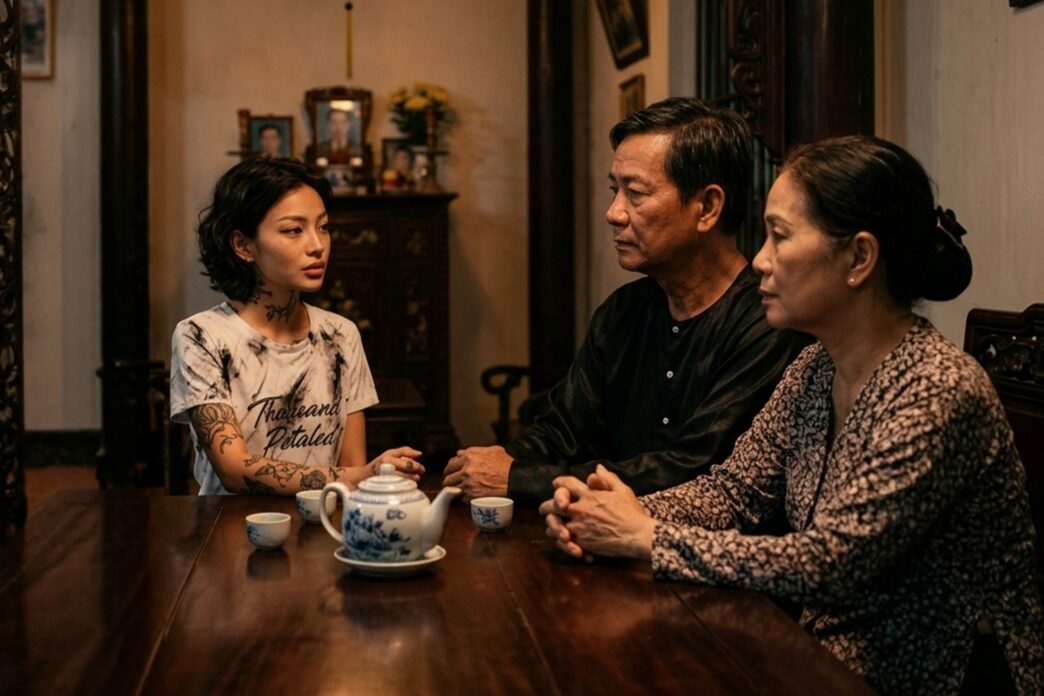
Balancing Cultural Respect And Emotional Boundaries
Growing up in a Vietnamese household often means being raised with strong values—respect for elders, family loyalty, sacrifice, and perseverance. These principles can create deeply connected families and a powerful sense of identity. But in some cases, those same values are used—intentionally or not—to justify control, emotional pressure, criticism, or guilt. When that happens, what should feel like love starts to feel suffocating.
If you’ve ever felt torn between honoring your parents and protecting your mental health, you’re not alone. Many adult children of Vietnamese parents struggle with this exact tension: “How do I respect my parents without losing myself?”
This article is about navigating that balance with clarity, emotional intelligence, and self-respect.




Understanding The Cultural Context
To deal with toxic dynamics effectively, you first need to understand where they come from.
Vietnamese parenting is heavily influenced by Confucian values, particularly the concept of filial piety—the belief that children owe obedience, respect, and care to their parents. In practice, this can look like:
- Prioritizing family needs over individual desires
- Avoiding disagreement or confrontation with elders
- Measuring worth through achievement and sacrifice
- Maintaining family reputation at all costs
For many parents, especially those who experienced war, poverty, or immigration hardship, survival shaped their worldview. Emotional expression may not have been safe or encouraged in their own upbringing. As a result, love is often expressed through provision, control, or pressure rather than validation or empathy.
Understanding this doesn’t excuse harmful behavior—but it does give you context. And context helps you respond with intention instead of pure frustration.
What Toxicity Can Look Like
Toxic parenting isn’t always obvious. It doesn’t have to involve yelling or extreme abuse. In many Vietnamese households, it shows up in quieter but persistent ways:
- Constant comparison to others (“Why can’t you be like them?”)
- Guilt-tripping (“After everything we’ve done for you…”)
- Dismissing emotions (“You’re too sensitive”)
- Controlling life choices (career, relationships, lifestyle)
- Conditional approval based on achievement
Over time, these patterns can lead to anxiety, low self-worth, people-pleasing, and difficulty making independent decisions.
One example:
You tell your parents you want to pursue a creative career. Instead of curiosity, you’re met with criticism or fear-based reactions. You may start doubting yourself—not because your goal is unrealistic, but because you’ve been conditioned to associate approval with safety.
Redefining Respect
One of the biggest internal conflicts is the idea that setting boundaries equals disrespect.
In reality, respect is not the same as obedience.
Healthy respect includes:
- Listening without blind compliance
- Acknowledging your parents’ sacrifices without surrendering your autonomy
- Communicating honestly rather than suppressing yourself
You can still speak calmly, avoid insults, and honor cultural values—while also saying “no” when something harms you.
A helpful reframe:
You are not rejecting your parents. You are rejecting behaviors that hurt you.
Setting Boundaries Without Escalation
Boundaries are essential, but how you communicate them matters—especially in cultures that value harmony and indirect communication.
Start with clarity. Ask yourself:
- What behavior is affecting me?
- What change do I need?
- What am I willing to do if nothing changes?
Then express it simply and calmly. For example:
Instead of:
“You always control everything in my life.”
Try:
“I feel overwhelmed when I don’t have space to make my own decisions. I need more independence in this area.”
A few key principles:
- Use “I” statements to reduce defensiveness
- Keep your tone calm, even if they react emotionally
- Avoid over-explaining or trying to “win” the argument
- Repeat your boundary consistently over time
Important: You may not get immediate understanding or agreement. Boundaries are not about controlling their reaction—they’re about defining your limits.
Managing Guilt And Emotional Pressure
Guilt is one of the most powerful tools in toxic family dynamics, especially in collectivist cultures.
You might hear things like:
- “We sacrificed everything for you.”
- “You’re becoming too Western.”
- “Family should come first no matter what.”
These statements can make you feel like choosing yourself is a betrayal.
But guilt is not always a sign that you’re doing something wrong. Often, it’s a sign that you’re doing something different.
Try separating feelings from facts:
- Feeling guilty does not mean you are guilty
- Choosing your mental health is not selfish
- You can love your parents and still disagree with them
Over time, as you continue honoring your needs, the intensity of that guilt will decrease.
Building Emotional Independence
If you grew up in a controlling environment, you may have learned to rely on your parents’ approval to feel secure.
Breaking that pattern means developing internal validation.
Start small:
- Make decisions without seeking permission
- Validate your own emotions instead of dismissing them
- Surround yourself with supportive people who respect your autonomy
Therapy can also be incredibly helpful, especially with someone who understands cultural dynamics. It gives you a space to process emotions without judgment.
Emotional independence doesn’t mean cutting your parents off. It means their approval no longer defines your self-worth.
When Distance Is Necessary
In some cases, healthier dynamics require physical or emotional distance.
This might look like:
- Limiting certain conversations
- Visiting less frequently
- Avoiding topics that consistently lead to conflict
- In extreme cases, taking a break from contact
Distance is not punishment. It’s protection.
And sometimes, space actually improves the relationship over time because it reduces constant friction.
Accepting What You Cannot Change
One of the hardest truths is this: your parents may never fully understand you.
They may not validate your feelings.
They may not apologize.
They may not change in the ways you hope.
Acceptance doesn’t mean approval. It means letting go of the expectation that they will become who you need them to be.
When you release that expectation, you free yourself from constant disappointment—and gain more control over your own emotional state.
Creating Your Own Definition Of Family
Family doesn’t have to be limited to biology.
You can build a support system of friends, mentors, or partners who:
- Respect your boundaries
- Encourage your growth
- Validate your experiences
This doesn’t replace your family—it expands your sense of belonging.
Moving Forward With Both Strength And Compassion
Navigating toxic Vietnamese parenting is not about choosing between culture and self. It’s about integrating both in a way that is sustainable.
You can honor your roots while creating new patterns.
You can respect your parents without abandoning yourself.
You can hold compassion for their past without tolerating harmful behavior in your present.
Healing is not quick or linear. But every boundary you set, every moment of self-trust, and every step toward emotional clarity is part of breaking the cycle.
And that matters—not just for you, but for the generations that come after you.